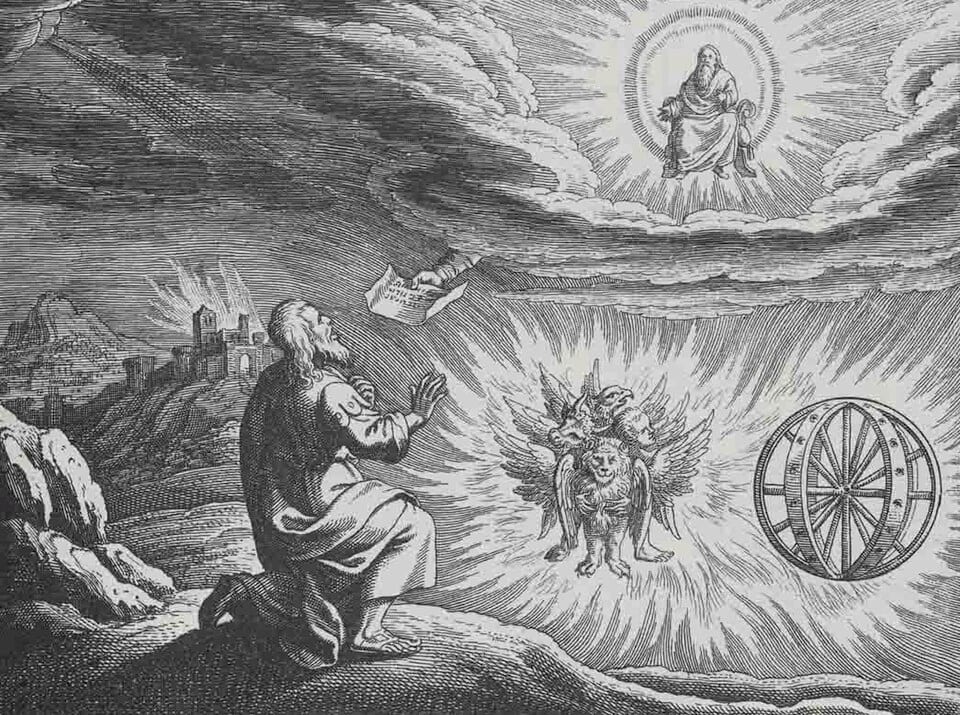

1 Enoch 12-14: Enoch's commission and the vision of the Great Glory
1 Enoch 12-14 · Book of the Watchers
Ἑνώχ
This edition presents the verbatim Greek (Ancient) text of the passage beside a fresh English rendering and a critical apparatus. It is a provisional scholarly draft, released openly for correction and not yet reviewed by a credentialed editor.
The apparatus carries a running commentary, notes on the controlled vocabulary and the rendering chosen for each term, any doctrinally-live ambiguity preserved with both readings, and cross-references to the lexicon. The original-language text is reproduced verbatim from the digital source credited in the provenance line of this page; any modern English translation still under copyright is cited as a comparand only.
[Pan.] (12:6) τὸν φόνον τῶν ἀγαπητῶν αὐτῶν ὄψονται, καὶ ἐπὶ τῇ ἀπωλείᾳ τῶν υἱῶν αὐτῶν στενάξουσιν καὶ δεηθήσονται εἰς τὸν αἰῶνα, καὶ οὐκ ἔσται αὐτοῖς εἰς ἔλεον καὶ εἰρήνην.
[Pan.] (13:1) Ὁ δὲ Ἑνὼχ τῷ Ἀζαὴλ εἶπεν Πορεύου· οὐκ ἔσται σοι εἰρήνη. κρίμα μέγα ἐξῆλθεν κατὰ σοῦ δῆσαί σε, (13:2) καὶ ἀνοχὴ καὶ ἐρώτησίς σοι οὐκ ἔσται περὶ ὧν ἔδειξας ἀδικημάτων καὶ περὶ πάντων τῶν ἔργων τῶν ἀσεβειῶν καὶ τῆς ἀδικίας καὶ τῆς ἁμαρτίας, ὅσα ὑπέδειξας τοῖς ἀνθρώποις. (13:3) Τότε πορευθεὶς εἴρηκα πᾶσιν αὐτοῖς, καὶ αὐτοὶ πάντες ἐφοβήθησαν, καὶ ἔλαβεν αὐτοὺς τρόμος καὶ φόβος. (13:4) καὶ ἠρώτησαν ὅπως γράψω αὐτοῖς ὑπομνήματα ἐρωτήσεως ἵνα γένηται αὐτοῖς ἄφεσις, καὶ ἵνα ἐγὼ ἀναγνῶ αὐτοῖς τὸ ὑπόμνημα τῆς ἐρωτήσεως ἐνώπιον Κυρίου τοῦ οὐρανοῦ, (13:5) ὅτι αὐτοὶ οὐκ ἔτι δύνανται λαλῆσαι, οὐδὲ ἀπᾶραι αὐτῶν τοὺς ὀφθαλμοὺς εἰς τὸν οὐρανὸν ἀπὸ αἰσχύνης περὶ ὧν ἡμαρτήκεισαν καὶ κατεκρίθησαν. (13:6) Τότε ἔγραψα τὸ ὑπόμνημα τῆς ἐρωτήσεως αὐτῶν καὶ τὰς δεήσεις περὶ τῶν πνευμάτων αὐτῶν καὶ περὶ ὧν δέονται, ὅπως αὐτῶν γένωνται ἄφεσις καὶ μακρότης.
[Pan.] (13:7) καὶ πορευθεὶς ἐκάθισα ἐπὶ τῶν ὑδάτων Δὰν ἐν γῇ Δάν, ἥτις ἐστὶν ἐκ δεξιῶν Ἑρμωνειεὶμ δύσεως· ἀνεγίγνωσκον τὸ ὑπόμνημα τῶν δεήσεων αὐτῶν. (13:8) ὡς ἐκοιμήθην, καὶ ἰδοὺ ὄνειροι ἐπ’ ἐμὲ ἦλθον καὶ ὁράσεις ἐπ’ ἐμὲ ἐπέπιπτον, καὶ ἴδον ὁράσεις ὀργῆς, καὶ ἦλθεν φωνὴ λέγουσα Εἶπον τοῖς υἱοῖς τοῦ οὐρανοῦ τοῦ ἐλέγξαι αὐτούς. (13:9) Καὶ ἔξυπνος γενόμενος ἦλθον πρὸς αὐτούς, καὶ πάντες συνηγμένοι ἐκάθηντο πενθοῦντες ἐν Ἐβελσατά, ἥτις ἐστὶν ἀνὰ μέσον τοῦ Λιβάνου καὶ Σενισήλ, περικεκαλυμμένοι τὴν ὄψιν. (13:10) ἐνώπιον αὐτῶν καὶ ἀνήγγειλα αὐτοῖς πάσας τὰς ὁράσεις ἃς εἶδον κατὰ τοὺς ὕπνους, καὶ ἠρξάμην λαλεῖν τοὺς λόγους τῆς δικαιοσύνης, ἐλέγχων τοὺς ἐγρηγόρους τοῦ οὐρανοῦ.
[Pan.] (14:1) Βίβλος λόγων δικαιοσύνης καὶ ἐλέγξεως ἐγρηγόρων τῶν ἀπὸ τοῦ αἰῶνος, κατὰ τὴν ἐντολὴν τοῦ ἁγίου τοῦ μεγάλου ἐν ταύτῃ τῇ ὁράσει. (14:2) Ἐγὼ εἶδον κατὰ τοὺς ὕπνους μου ἃ νῦν λέγω ἐν γλώσσῃ σαρκίνῃ ἐν τῷ πνεύματι τοῦ στόματός μου, ὃ ἔδωκεν ὁ μέγας τοῖς ἀνθρώποις λαλεῖν ἐν αὐτοῖς καὶ νοήσει καρδίας· (14:3) ὃς ἔκτισεν καὶ ἔδωκεν ἐλέγξασθαι ἐγρηγόρους τοὺς υἱοὺς τοῦ οὐρανοῦ. (14:4) Ἐγὼ τὴν ἐρώτησιν ὑμῶν τῶν ἀγγέλων ἔγραψα, καὶ ἐν τῇ ὁράσει μου τοῦτο ἐδείχθη· καὶ οὔτε ἡ ἐρώτησις ὑμῶν παρεδέχθη, (14:5) ἵνα μηκέτι εἰς τὸν οὐρανὸν ἀναβῆτε ἐπὶ πάντας τοὺς αἰῶνας, καὶ ἐν τοῖς δεσμοῖς τῆς γῆς ἐρρέθη δῆσαι ὑμᾶς εἰς πάσας τὰς γενεὰς τοῦ αἰῶνος, (14:6) καὶ ἵνα περὶ τούτων ἴδητε τὴν ἀπώλειαν τῶν υἱῶν ὑμῶν τῶν ἀγαπητῶν, καὶ ὅτι οὐκ ἔσται ὑμῖν ὄνησις αὐτῶν, ἀλλὰ πεσοῦνται ἐνώπιον ὑμῶν ἐν μαχαίρᾳ.
[Pan.] (14:7) καὶ ἡ ἐρώτησις ὑμῶν περὶ αὐτῶν οὐκ ἔσται οὐδὲ περὶ ὑμῶν· καὶ ὑμεῖς κλαίοντες καὶ δεόμενοι καὶ μὴ λαλοῦντες πᾶν ῥῆμα ἀπὸ τῆς γραφῆς ἧς ἔγραψα. (14:8) Καὶ ἐμοὶ ἐφ’ ὁράσει οὕτως ἐδείχθη· ἰδοὺ νεφέλαι ἐν τῇ ὁράσει ἐκάλουν καὶ ὁμίχλαι με ἐφώνουν, καὶ διαδρομαὶ τῶν ἀστέρων καὶ διαστραπαί με κατεσπούδαζον καὶ ἐθορύβαζόν με, καὶ ἄνεμοι ἐν τῇ ὁράσει μου ἐξεπέτασάν με (14:9) καὶ ἐπῆράν με ἄνω καὶ εἰσήνεγκάν με εἰς τὸν οὐρανόν, καὶ εἰσῆλθον μέχρις ἤγγισα τείχους οἰκοδομῆς ἐν λίθοις χαλάζης καὶ γλώσσης πυρὸς κύκλῳ αὐτῶν· καὶ ἤρξαντο ἐκφοβεῖν με. (14:10) Καὶ εἰσῆλθον εἰς τὰς γλώσσας τοῦ πυρός, καὶ ἤγγισα εἰς οἶκον μέγαν οἰκοδομημένον ἐν λίθοις χαλάζης, καὶ οἱ τοῖχοι τοῦ οἴκου ὡς λιθόπλακες, καὶ πᾶσαι ἦσαν ἐκ χιόνος, καὶ ἐδάφη χιονικά,
[Pan.] (14:11) καὶ αἱ στέγαι ὡς διαδρομαὶ ἀστέρων καὶ ἀστραπαί, καὶ μεταξὺ αὐτῶν χερουβὶν πύρινα, καὶ οὐρανὸς αὐτῶν ὕδωρ, (14:12) καὶ πῦρ φλεγόμενον κύκλῳ τῶν τειχῶν, καὶ θύραι πυρὶ καιόμεναι. (14:13) εἰσῆλθον εἰς τὸν οἶκον ἐκεῖνον, θερμὸν ὡς πῦρ καὶ ψυχρὸν ὡς χιών, καὶ πᾶσα τροφὴ ζωῆς οὐκ ἦν ἐν αὐτῷ· φόβος με ἐκάλυψεν καὶ τρόμος με ἔλαβεν. (14:14) καὶ ἤμην σειόμενος καὶ τρέμων, καὶ ἔπεσον. ἐθεώρουν ἐν τῇ ὁράσει μου, (14:15) καὶ ἰδοὺ ἄλλη θύρα ἀνεῳγμένη κατέναντί μου, καὶ ὁ οἶκος μείζων τούτου, καὶ ὅλος οἰκοδομημένος ἐν γλώσσαις πυρός, (14:16) καὶ ὅλος διαφέρων ἐν δόξῃ καὶ ἐν τιμῇ καὶ ἐν μεγαλοσύνῃ, ὥστε μὴ δύνασθαί με ἐξειπεῖν ὑμῖν περὶ τῆς δόξης καὶ περὶ τῆς μεγαλοσύνης αὐτοῦ. (14:17) τὸ ἔδαφος αὐτοῦ ἦν πυρός, τὸ δὲ ἀνώτερον αὐτοῦ ἦσαν ἀστραπαὶ καὶ διαδρομαὶ ἀστέρων, καὶ ἡ στέγη αὐτοῦ ἦν πῦρ φλέγον.
[Pan.] (14:18) Ἐθεώρουν δὲ καὶ εἶδον θρόνον ὑψηλόν, καὶ τὸ εἶδος αὐτοῦ ὡσεὶ κρυστάλλινον, καὶ τροχὸς ὡς ἡλίου λάμποντος καὶ ὄρος χερουβίν. (14:19) καὶ ὑποκάτω τοῦ θρόνου ἐξεπορεύοντο ποταμοὶ πυρὸς φλεγόμενοι, καὶ οὐκ ἐδυνάσθην ἰδεῖν. (14:20) καὶ ἡ δόξα ἡ μεγάλη ἐκάθητο ἐπ’ αὐτῷ· τὸ περιβόλαιον αὐτοῦ ὡς εἶδος ἡλίου, λαμπρότερον καὶ λευκότερον πάσης χιόνος. (14:21) καὶ οὐκ ἐδύνατο πᾶς ἄγγελος παρελθεῖν εἰς τὸν οἶκον τοῦτον καὶ ἰδεῖν τὸ πρόσωπον αὐτοῦ διὰ τὸ ἔντιμον καὶ ἔνδοξον, καὶ οὐκ ἐδύνατο πᾶσα σὰρξ ἰδεῖν αὐτοῦ (14:22) τὸ πῦρ φλεγόμενον κύκλῳ· καὶ πῦρ μέγα παρειστήκει αὐτῷ, καὶ οὐδεὶς ἐγγίζει αὐτῷ. κύκλῳ μυρίαι μυριάδες ἑστήκασιν ἐνώπιον αὐτοῦ, καὶ πᾶς λόγος αὐτοῦ ἔργον. (14:23) καὶ οἱ ἅγιοι τῶν ἀγγέλων οἱ ἐγγίζοντες αὐτῷ οὐκ ἀποχωροῦσιν νυκτὸς οὔτε ἀφίστανται αὐτοῦ.
[Pan.] (14:24) Κἀγὼ ἤμην ἕως τούτου ἐπὶ πρόσωπόν μου βεβλημένος καὶ τρέμων, καὶ ὁ κύριος τῷ στόματι αὐτοῦ ἐκάλεσέν με καὶ εἶπέν μοι, Πρόσελθε ὧδε, Ἑνώχ, καὶ τὸν λόγον μου ἄκουσον. (14:25) καὶ προσελθών μοι εἷς τῶν ἁγίων ἤγειρέν με καὶ ἔστησέν με, καὶ προσήγαγέν με μέχρι τῆς θύρας· ἐγὼ δὲ τὸ πρόσωπόν μου κάτω ἔκυφον.
[Akhmim codex] (12:6) …they will see the slaughter of their beloved ones, and over the destruction of their sons they will groan, and they will petition forever, and there will be for them neither mercy nor peace.”
[Akhmim codex] (13:1) And Enoch said to Azael, “Go; there will be no peace for you. A great sentence has gone out against you, to bind you. (13:2) And there will be for you neither relief nor petition, because of the wrongdoings that you showed, and because of all the works of impiety and of injustice and of sin that you showed to humankind.” (13:3) Then I went and spoke to them all, and they were all afraid, and trembling and fear seized them. (13:4) And they asked that I write for them memorials of petition, so that there might be forgiveness for them, and that I might read for them the memorial of the petition before the Lord of heaven, (13:5) because they themselves can no longer speak, nor lift their eyes to heaven, from shame for the things in which they had sinned and for which they had been condemned. (13:6) Then I wrote the memorial of their petition and the supplications concerning their spirits and concerning what they ask, that there might be for them forgiveness and length.
[Akhmim codex] (13:7) And I went and sat down by the waters of Dan, in the land of Dan, which is on the right of Hermoneieim, of the west; I was reading the memorial of their supplications. (13:8) As I fell asleep, behold, dreams came upon me and visions were falling upon me, and I saw visions of wrath, and a voice came, saying, “Speak to the sons of heaven, to reprove them.” (13:9) And when I had woken, I came to them, and they were all gathered together, sitting and mourning in Ebelsata, which is between Lebanon and Senisel, with their faces covered. (13:10) Before them, I recounted to them all the visions that I had seen in my sleep, and I began to speak the words of righteousness, reproving the Watchers of heaven.
[Akhmim codex] (14:1) Book of the words of righteousness and of the reproof of the Watchers who are from the age, according to the command of the Holy Great One in this vision. (14:2) I saw in my sleep the things that I now tell with a tongue of flesh, with the spirit of my mouth, which the Great One has given to humankind, to speak with them and with understanding of heart; (14:3) who created and gave to reprove Watchers, the sons of heaven. (14:4) I wrote your petition, you angels, and in my vision this was shown: your petition has not been accepted, (14:5) so that you will no longer go up into heaven for all the ages, and it has been said that you are to be bound in the bonds of the earth for all the generations of the age; (14:6) and that, concerning these, you will see the destruction of your beloved sons, and that you will have no profit from them, but they will fall before you by the sword.
[Akhmim codex] (14:7) And there will be no petition of yours concerning them, nor concerning yourselves; and you, weeping and petitioning and not speaking a single word from the writing that I wrote. (14:8) And to me, in a vision, it was shown thus: behold, clouds in the vision were calling, and mists were summoning me, and the courses of the stars and the lightnings were hastening me and agitating me, and winds in my vision spread me out (14:9) and lifted me upward and carried me into heaven. And I went in until I drew near to a wall of a building of hailstones, and a tongue of fire around them; and they began to terrify me. (14:10) And I went into the tongues of the fire, and I drew near to a great house built of hailstones, and the walls of the house were like stone slabs, and all of them were of snow, and the floors were of snow…
[Akhmim codex] (14:11) …and the roofs like courses of stars and lightnings, and between them fiery cherubim, and their heaven was water, (14:12) and fire flaming round the walls, and doors burning with fire. (14:13) I went into that house, hot as fire and cold as snow, and there was no nourishment of life in it; fear covered me and trembling seized me. (14:14) And I was shaking and trembling, and I fell. I was beholding in my vision, (14:15) and behold, another door standing open before me, and the house was greater than this one, and all of it built of tongues of fire, (14:16) and all of it excelling in glory and in honour and in majesty, so that I am not able to tell you about its glory and about its majesty. (14:17) Its floor was of fire, and its upper part was lightnings and courses of stars, and its roof was flaming fire.
[Akhmim codex] (14:18) And I was beholding, and I saw a lofty throne, and its appearance was as if crystalline, and a wheel as of the shining sun, and a mountain of cherubim. (14:19) And from beneath the throne came forth rivers of fire, flaming, and I was not able to look. (14:20) And the Great Glory was sitting upon it; his garment was like the appearance of the sun, brighter and whiter than any snow. (14:21) And no angel was able to enter into this house and to look on his face, because of the honour and the glory; and no flesh was able to look on him. (14:22) The fire was flaming round about; and a great fire stood beside him, and no one draws near to him. Round about, myriads upon myriads stand before him, and his every word is a deed. (14:23) And the holy ones of the angels who draw near to him do not withdraw by night, nor do they depart from him.
[Akhmim codex] (14:24) And I, until then, had been cast on my face and trembling; and the Lord with his own mouth called me and said to me, “Come here, Enoch, and hear my word.” (14:25) And one of the holy ones came to me and raised me and stood me up, and brought me as far as the door; but I kept my face bowed down.
This edition sets the verbatim Hebrew beside a fresh English rendering and a critical apparatus: a running commentary on the passage, notes on the controlled vocabulary and the rendering chosen for each term, and cross-references to the lexicon and to related sections. It is a provisional scholarly draft, released openly for correction and not yet reviewed by a credentialed editor.
Controlled terms noted in this passage: egregoros (rendered as watcher), hagios (rendered as holy), ho-hagios-ho-megas (rendered as holy-great-one), megalosyne (rendered as majesty), aion (rendered as age), dikaios (rendered as righteous), azael (rendered as azael), pneuma (rendered as spirit), hermon (rendered as hermon), angelos (rendered as angel), cheroubin (rendered as cherubim), doxa (rendered as glory), thronos (rendered as throne), oros (rendered as mountain). For each, the apparatus carries the sense set and the reason for the rendering chosen.