Text · jewish mysticism

Sefer Yetzirah 1; the thirty-two paths and the ten sefirot

ספר יצירה

Sefer Yetzirah · The Book of Formation · Anonymous; pseudepigraphically ascribed to the patriarch Abraham

canonicalHebrewc. 2nd-9th c. CE (date disputed)tr. Hekhal Targum Project (machine-assisted draft; pending scholarly review)CC-BY-SA-4.0
  • TranslatorHekhal Targum Project (machine-assisted draft; pending scholarly review)
  • LicenceCC-BY-SA-4.0
  • Statuscanonical
  • Last revised2026-11-14
⁂ In depth a fuller, illustrated account

About Sefer Yetzirah 1; the thirty-two paths and the ten sefirot

Sefer Yetzirah ("the Book of Formation") is a short Hebrew work on the making of the world out of ten sefirot and the twenty-two letters. The first chapter counts thirty-two paths of wisdom and sets out the ten sefirot "without what": ten and not nine, ten and not eleven, their measure ten depths without end, their end fixed in their beginning like a flame bound to a coal. It then names them one by one: the breath of the living God, breath from breath, water from breath, fire from water, and the six directions sealed with the letters of the Name.

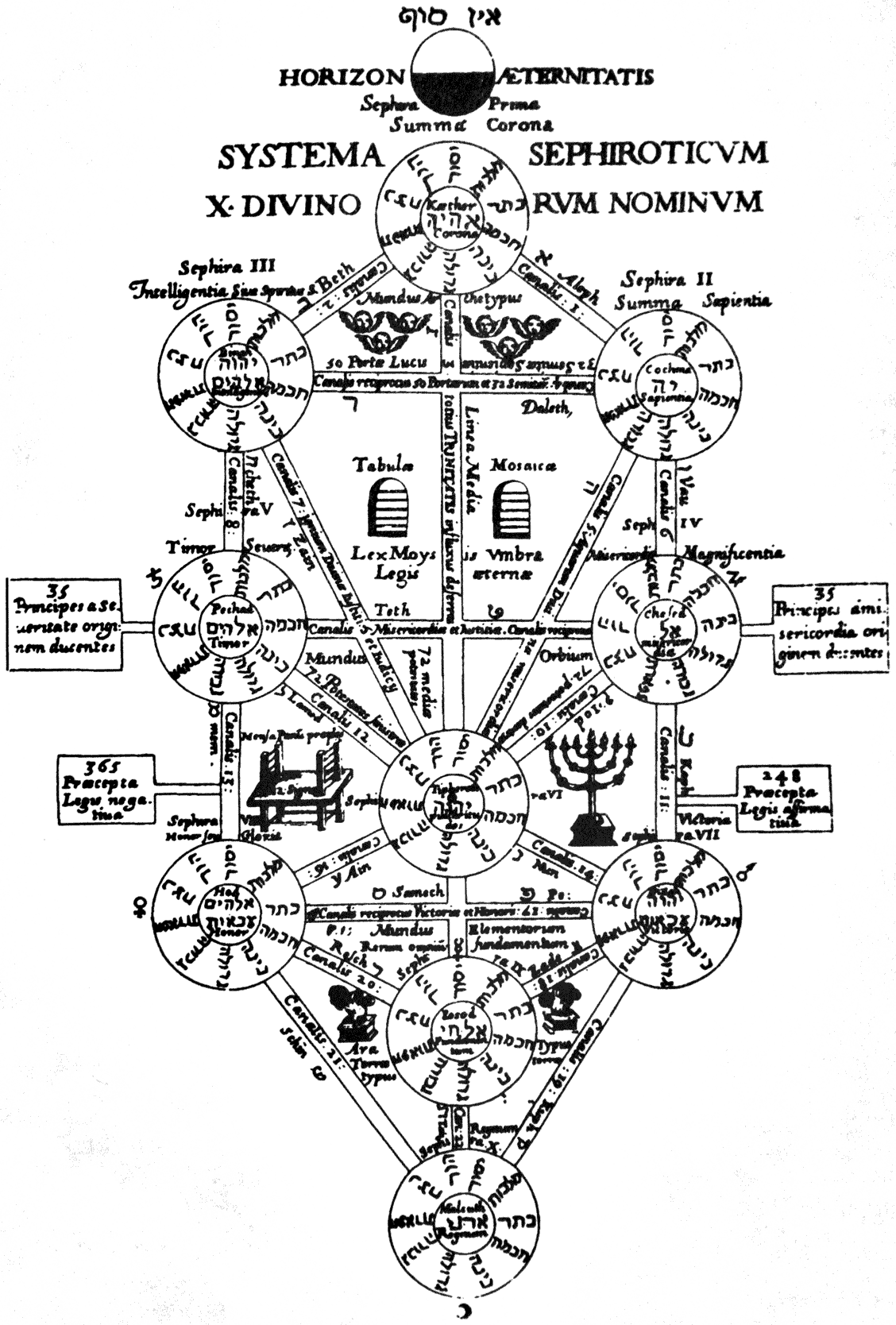
Engraved diagram of ten circles joined by twenty-two lettered paths, the Tree of the Sefirot as drawn by Athanasius Kircher.
The Tree of the ten sefirot joined by twenty-two lettered paths, an engraving from Athanasius Kircher's Oedipus Aegyptiacus (1652). It is a later diagram: Sefer Yetzirah speaks of thirty-two paths of wisdom and has no figure of a tree. · A. Kircher, 1652 (public domain)

Sefer Yetzirah 1: the thirty-two paths and the ten sefirot

Sefer Yetzirah · The Book of Formation

ספר יצירה

canonical c. 2nd-9th c. CE (date disputed) Hebrew Anonymous; pseudepigraphically ascribed to the patriarch Abraham tr. Hekhal Targum Project (machine-assisted draft; pending scholarly review)

This edition presents the verbatim Hebrew text of the passage beside a fresh English rendering and a critical apparatus. It is a provisional scholarly draft, released openly for correction and not yet reviewed by a credentialed editor.

The apparatus carries a running commentary, notes on the controlled vocabulary and the rendering chosen for each term, any doctrinally-live ambiguity preserved with both readings, and cross-references to the lexicon. The original-language text is reproduced verbatim from the digital source credited in the provenance line of this page; any modern English translation still under copyright is cited as a comparand only.

בשלשים ושתים נתיבות פליאות חכמה חקק יה יהוה צבאות אלהי ישראל אלהים חיים ומלך עולם אל שדי רחום וחנון רם ונשא שוכן עד מרום וקדוש שמו וברא את עולמו בשלשה ספרים בספר וספר וספור:

עשר ספירות בלי מה ועשרים ושתים אותיות יסוד שלש אמות ושבע כפולות ושתים עשרה פשוטות:

עשר ספירות בלימה מספר עשר אצבעות חמש כנגד חמש וברית יחיד מכוונת באמצע כמלת הלשון וכמילת מעור:

עשר ספירות בלימה עשר ולא תשע, עשר ולא אחת עשרה, הבן בחכמה וחכם בבינה, בחון בהם וחקור מהם והעמד דבר על בוריו והשב יוצר על מכונו:

עשר ספירות בלי מה מדתן עשר שאין להם סוף עומק ראשית ועומק אחרית עומק טוב ועומק רע עומק רום ועומק תחת עומק מזרח ועומק מערב עומק צפון ועומק דרום אדון יחיד אל מלך נאמן מושל בכולם ממעון קדשו ועד עדי עד:

עשר ספירות בלי מה צפייתן כמראה הבזק ותכליתן אין להן קץ ודברו בהן ברצוא ושוב ולמאמרו כסופה ירדופו ולפני כסאו הם משתחוים:

עשר ספירות בלי מה נעוץ סופן בתחלתן ותחלתן בסופן כשלהבת קשורה בגחלת שאדון יחיד ואין לו שני ולפני אחד מה אתה סופר:

עשר ספירות בלימה בלום פיך מלדבר ולבך מלהרהר ואם רץ לבך שוב למקום שלכך נאמר והחיות רצוא ושוב. ועל דבר זה נכרת ברית:

עשר ספירות בלימה, אחת רוח אלהים חיים ברוך ומבורך שמו של חי העולמים קול ורוח ודבור וזהו רוח הקדש:

שתים רוח מרוח חקק וחצב בה עשרים ושתים אותיות יסוד שלש אמות ושבע כפולות ושתים עשרה פשוטות ורוח אחת מהן:

שלש מים מרוח חקק וחצב בהן תהו ובהו רפש וטיט חקקן כמין ערוגה הציבן כמין חומה סככם כמין מעזיבה:

ארבע אש ממים חקק וחצב בה כסא הכבוד שרפים ואופנים וחיות הקודש ומלאכי השרת ומשלשתן יסד מעונו שנאמר עושה מלאכיו רוחות משרתיו אש לוהט:

(חמש שלש אותיות מן הפשוטות חתם רום ברר שלש וקבען בשמו הגדול יה”ו. וחתם בהם שש קצוות) [הנוסחא הנכונה: בירר ג’ אותיות מן הפשוטות בסוד ג’ אמות אמ”ש וקבען בשמו הגדול וחתם בהם ו’ קצוות, חמש חתם רום] ופנה למעלה וחתמו ביה”ו. שש חתם תחת ופנה למטה וחתמו ביו”ה. שבע חתם מזרח ופנה לפניו וחתמו בהי”ו. שמנה חתם מערב ופנה לאחריו וחתמו בהו”י. תשע חתם דרום ופנה לימינו וחתמו בוי”ה. עשר חתם צפון ופנה לשמאלו וחתמו בוה”י:

אלו עשר ספירות בלימה אחת רוח אלהים חיים ורוח מרוח ומים מרוח ואש ממים ורום מעלה ותחת מזרח ומערב וצפון ודרום [בדפוס מנטובה (שכ”ב) הגי’ כמ”ש באוצר ה’ וברמ”ב]:
With thirty-two wondrous paths of Wisdom Yah engraved: YHVH Tzeva’ot, the God of Israel, Elohim Chayyim (the living God) and Melekh Olam (eternal King), El Shaddai, merciful and gracious, high and exalted, dwelling forever, on high and holy is His Name; and He created His world with three sefarim: with sefer, and sefar, and sippur.

Ten sefirot beli mah (without-what), and twenty-two foundation letters: three mothers, and seven doubles, and twelve simples.

Ten sefirot belimah: the number of the ten fingers, five over against five, and a covenant of the Unique One set exactly in the middle, like the circumcision of the tongue and like the circumcision of the member (ma’or, literally ‘nakedness’).

Ten sefirot belimah: ten and not nine, ten and not eleven. Understand with Wisdom, and be wise with Understanding; examine with them and probe from them; set the matter upon its clarity, and restore the Former (Yotzer) to His base.

Ten sefirot beli mah: their measure is ten, which have no end: depth of beginning and depth of end, depth of good and depth of evil, depth of above and depth of below, depth of east and depth of west, depth of north and depth of south. The singular Lord (Adon Yachid), El, faithful King, rules over them all from His holy dwelling, unto eternity of eternity.

Ten sefirot beli mah: their appearance is like the sight of the lightning-flash, and their limit, there is no end to them. His word is in them in running and returning; at His utterance they pursue like a whirlwind, and before His throne they bow down.

Ten sefirot beli mah: their end is embedded in their beginning and their beginning in their end, like a flame bound to a coal; for the Lord is singular and has no second, and before One, what do you count?

Ten sefirot belimah: restrain your mouth from speaking and your heart from thinking; and if your heart runs, return to the Place; therefore it is said: “And the living creatures ran and returned.” And concerning this matter a covenant was cut.

Ten sefirot belimah: One: the breath (ruach) of Elohim Chayyim, blessed and blessed be the Name of the Life of the worlds: voice, and breath, and speech; and this is the holy breath (ruach ha-kodesh).

Two: breath (ruach) from breath. He engraved and hewed in it twenty-two foundation letters: three mothers, and seven doubles, and twelve simples; and one breath is from them.

Three: water from breath (ruach). He engraved and hewed in them tohu and bohu, mire and clay. He engraved them like a kind of garden-bed, He set them up like a kind of wall, He roofed them over like a kind of ceiling.

Four: fire from water. He engraved and hewed in it the Throne of Glory, seraphim and ofanim and the holy living creatures (chayyot ha-kodesh) and the ministering angels; and from the three of them He founded His dwelling, as it is said: “He makes His angels breaths, His ministers a flaming fire.”

(Five: three letters from the simples. He sealed height; He chose three and fixed them in His great Name YHV, and sealed with them six extremities.) [The correct version: He chose three letters from the simples, in the secret of the three mothers AMSh, and fixed them in His great Name, and sealed with them six extremities. Five: He sealed height,] and turned upward and sealed it with YHV. Six: He sealed below, and turned downward and sealed it with YVH. Seven: He sealed east, and turned to His front and sealed it with HYV. Eight: He sealed west, and turned to His back and sealed it with HVY. Nine: He sealed south, and turned to His right and sealed it with VYH. Ten: He sealed north, and turned to His left and sealed it with VHY.

These are the ten sefirot belimah: One, the breath (ruach) of Elohim Chayyim; and breath from breath; and water from breath; and fire from water; and height above and below, east and west, and north and south. [In the Mantua printing (5322, that is 1562) the reading is as written in Otzar H’ and in ha-RMB.]
Provisional draft (pending scholarly review)
An orientation

This edition sets the verbatim Hebrew beside a fresh English rendering and a critical apparatus: a running commentary on the passage, notes on the controlled vocabulary and the rendering chosen for each term, and cross-references to the lexicon and to related sections. It is a provisional scholarly draft, released openly for correction and not yet reviewed by a credentialed editor.

Controlled terms noted in this passage: sefirot (rendered as the-ten), chokhmah (rendered as wisdom), binah (rendered as understanding), olamot (rendered as worlds), ein-sof (rendered as the-endless), sod (rendered as secret), beli mah / belimah (בלי מה / בלימה) (rendered as beli mah (without-what) / belimah (transliterated)). For each, the apparatus carries the sense set and the reason for the rendering chosen.

Apparatus
? Questions this edition answers

At a glance

What is in Sefer Yetzirah chapter 1?
The first chapter counts thirty-two paths of wisdom and sets out the ten sefirot "without what": ten and not nine, ten and not eleven, their measure ten depths without end, their end fixed in their beginning like a flame bound to a coal. It then names them one by one: the breath of the living God, breath from breath, water from breath, fire from water, and the six directions sealed with the letters of the Name.
Has Sefer Yetzirah been translated into English before?
Yes, many times. Isidor Kalisch published an English version in 1877 and W. W. Westcott in 1887 (both public domain); Aryeh Kaplan's translation with commentary appeared in 1990 and A. Peter Hayman's scholarly edition of the manuscripts in 2004; Sefaria carries a complete community English. This edition adds an open-licence English of the common printed text with its reading decisions recorded.
Which Hebrew text is translated here?
The common printed text as it stands in the Warsaw 1884 edition, taken from Sefaria (public domain), with the Warsaw editors' brackets reproduced. The ordinary printed editions follow the shorter of the two forms first printed at Mantua in 1562; this text has not been collated against the manuscripts. The Gra version and the manuscript recensions edited by Hayman are not translated here.
Is this translation reliable?
It is a machine-assisted, provisional draft that has not been reviewed by a credentialed editor. Every rendering decision, crux and open reading is recorded in the apparatus.
Tradition
jewish-mysticism
Language
Hebrew
Period
c. 2nd-9th c. CE (date disputed)
Attribution
Anonymous; pseudepigraphically ascribed to the patriarch Abraham
Translator
Hekhal Targum Project (machine-assisted draft; pending scholarly review)
License
CC-BY-SA-4.0
Provenance
Hebrew of Sefer Yetzirah as printed in the Warsaw 1884 edition with commentaries, taken from Sefaria (version 'Sefer Yetzirah, Warsaw 1884', public domain; source record at the National Library of Israel, NNL_ALEPH001310968), fetched 2026-11-10. This is the common printed text in six chapters and 48 mishnayot (1,699 Hebrew words by our count, the Warsaw editors' bracketed additions included). The ordinary printed editions follow the shorter of the two forms first printed at Mantua in 1562; the Warsaw text has not been collated against the manuscripts of that short recension, or against the long and Saadian recensions. The Warsaw editors' parentheses and square brackets (readings they would delete, their corrections, variant notes, and a supplement from the Mantua print at 2:3) are reproduced as printed. Sefaria also carries the Gra version (Warsaw 1884, public domain) and the text in Eisenstein's Otzar Midrashim (1915, public domain); they are not translated here. A collation against a scan of the Warsaw print and against Hayman's edition of the manuscripts (2004) is still an open editor item.

Prior English translations

Hekhal does not claim to be the first English translation of a work where one already exists. Where prior translations are known they are listed here with their rights status, so a reader can see exactly what this edition adds and what it does not.

  • Kalisch, Isidor, 1877: Sepher Yezirah. A Book on Creation; or the Jewish Metaphysics of Remote Antiquity (New York: L. H. Frank & Co.)public domainThe earliest English version, printed with the Hebrew. Sefaria carries its first chapter.
  • Westcott, William Wynn, 1887: Sepher Yetzirah. The Book of Formation and the Thirty-two Paths of Wisdom (Bath: Robert H. Fryar)public domainBy a founder of the Hermetic Order of the Golden Dawn; often reprinted.
  • Kaplan, Aryeh, 1990: Sefer Yetzirah. The Book of Creation in Theory and Practice (York Beach: Samuel Weiser)in copyrightGives four versions of the text (short, long, Saadia and Gra) with a long commentary.
  • Hayman, A. Peter, 2004: Sefer Yesira: Edition, Translation and Text-Critical Commentary (Tuebingen: Mohr Siebeck)in copyrightThe scholarly edition: a synoptic Hebrew and English text of the manuscript recensions.
  • Sefaria Community Translation, 2020s: Sefaria.org, Sefer Yetzirah (English, CC0)public domainA complete community English: all 48 mishnayot of the six chapters, counted 2026-11-10.

Further reading

Cite this page

Stable URLs are part of the editorial commitment. This address will not change.

Anonymous; pseudepigraphically ascribed to the patriarch Abraham. "Sefer Yetzirah 1; the thirty-two paths and the ten sefirot." Hekhal: An Open Reference for Esoteric Tradition. Last modified November 14, 2026. https://hekhal.org/texts/sefer-yetzirah-ch1-targum.

Free · Reader's edition

Take this text with you.

This edition as a book: the original and the English facing each other, the full apparatus and notes, a citation line and the licence, typeset to print or to read on an e-reader. The text stays free online; the files are yours to keep and share.

  • PDF · 20 pp · 238 KB
  • ePub · 16 KB
  • Original + English
  • Full apparatus
  • Cite-ready

Included The whole of Sefer Yetzirah in one volume: 6 parts, 78 pages.

The links arrive by email too. Reply "stop" to any message and you are off every list. How we use your address.