Abraham Abulafia and the ecstatic-prophetic Kabbalah of the thirteenth century -- the letter-permutation praxis, the Sicilian school, the failed papal mission, the Sufi parallels, the absorption into Christian Cabala via Pico, and the Wolfson-Idel reading of the Abulafian corpus.
Abulafia and Prophetic Kabbalah
Abulafian or “ecstatic-prophetic” Kabbalah is a stream of medieval Jewish mysticism developed by Abraham Abulafia (1240-c.1291) and his Sicilian and Palestinian disciples that runs alongside the dominant theosophic-theurgical Kabbalah of the Zoharic stream and is theoretically and methodologically distinct from it. Where the Castilian Zoharic tradition organizes around the sefirotic system and the symbolic-anatomical articulation of the inner divine life, Abulafian Kabbalah organizes around letter-permutation (tzeruf otiyot), recitation of divine names, and the experiential production of a prophetic state in the practitioner. The two streams share a common Kabbalistic vocabulary and a common medieval Mediterranean intellectual ecology, but the goals, methods, and texts are sufficiently different that they constitute distinguishable doctrinal traditions. This sub-codex treats Abulafian Kabbalah at the level of the corpus and the scholarly readings; the Kabbalah codex orients the broader tradition.
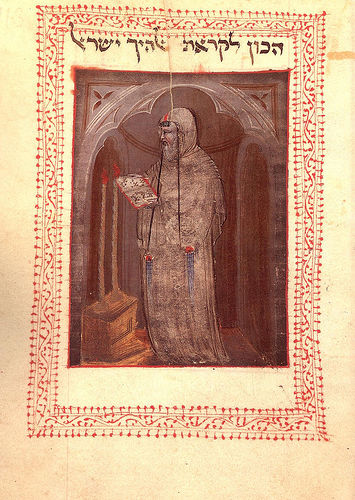
Page from Abraham Abulafia’s Or ha-Sekhel (“Light of the Intellect”), 1285. Biblioteca Apostolica Vaticana, MS Ebr. 597, leaf 113 recto. Public domain. Or ha-Sekhel is among the principal Abulafian handbooks for the letter-permutation praxis; the manuscript survives in a copy made within five years of the text’s composition.
1. The split: theosophic-theurgical vs. ecstatic-prophetic
The principal interpretive framework for the thirteenth-century Kabbalistic field is Moshe Idel’s typological distinction between theosophic-theurgical Kabbalah (the Zoharic mainstream) and ecstatic-prophetic Kabbalah (the Abulafian stream), articulated in Kabbalah: New Perspectives (Yale 1988) and elaborated across Idel’s subsequent work. The distinction reorganizes the field around its actual methodological divisions rather than around chronology or geography.
The theosophic-theurgical type, dominant in Castile around Moses de Leon and the Zoharic circle, organizes around the doctrine of the ten sefirot as the symbolic articulation of the divine self-disclosure. The Kabbalist’s work is to understand the inner structure of the divine and, through kavvanot in prayer and ritual, to effect operations on that structure (the theurgical dimension). The dominant texts are exegetical-symbolic; the sod (esoteric) reading of Torah is the principal practice; the hieros gamos of the male and female sefirot is a central theological motif.
The ecstatic-prophetic type, dominant in the circle around Abulafia and his Sicilian followers, organizes around the production of a prophetic state in the practitioner. The Kabbalist’s work is to break the ordinary linguistic-cognitive functioning of the soul through letter-permutation and divine-name recitation, producing an experiential state in which prophetic insight becomes possible. The dominant texts are methodological-experiential handbooks; the central operation is on the self rather than on the divine; the soteriological telos is the practitioner’s attainment of nevuah (prophecy) in a technical Abulafian sense.
The two streams are not mutually exclusive. Abulafia presupposes the sefirotic vocabulary and discusses sefirot extensively in his writings. The Zoharic stream contains material that reads as adjacent to letter- permutation practice (the gematric reading of the divine name, the combinatorial structure of Sefer Yetzirah received in Kabbalistic formation). But the dominant emphasis, the principal texts, and the characteristic operations differ, and the two streams developed in substantial doctrinal independence through the thirteenth century.
2. Biography: Saragossa, the papal mission, the Sicilian school
Abraham Abulafia was born in 1240 in Saragossa (Spanish Aragon) and died around 1291, location uncertain. His early intellectual formation took place in Spain; he studied Maimonides’ Guide of the Perplexed with notable intensity, and the Maimonidean philosophical apparatus remains a recurring framework in his Kabbalistic writings even when he diverges sharply from Maimonidean conclusions.
In the late 1260s Abulafia traveled to the Levant, with the intention of reaching the legendary Sambatyon river beyond which the Ten Lost Tribes were thought to reside. The journey was aborted; he returned to Italy and took up residence in Capua, where he taught and wrote substantially. His disciples in Italy included Hillel of Verona and the Sicilian master Joseph Gikatilla (the same Gikatilla whose Sha’arei Orah would later become a foundational systematic Kabbalistic text on the sefirotic side, with Gikatilla having shifted from Abulafian to theosophic Kabbalah over his career).
In 1280 Abulafia traveled to Rome with the intention of an audience with Pope Nicholas III. The biographical sources are uncertain on the precise purpose; Idel reads the mission as eschatological, with Abulafia attempting to convert the pope or to announce the messianic moment. The pope died before the audience could occur; Abulafia was imprisoned by the Franciscans and held for some weeks before being released. He left Italy for Sicily and spent his last decade principally on the island, with disciples in Messina, Palermo, and Comino. The Sicilian school produced the largest single Abulafian corpus and is the principal scholarly reference for the developed Abulafian tradition.
Abulafia’s death is undocumented in precise terms; the late writings suggest a final residence on Comino (a small island near Malta) in his last years. The principal biographical reconstruction is in Moshe Idel’s Studies in Ecstatic Kabbalah (SUNY 1988) and The Mystical Experience in Abraham Abulafia, trans. Jonathan Chipman (SUNY 1988); Elliot Wolfson’s Abraham Abulafia: Kabbalist and Prophet (Cherub Press 2000) is the principal alternative scholarly study.
3. Method: tzeruf otiyot, breathing, music
The Abulafian method is described across multiple handbooks, most systematically in Hayyei ha-Olam ha-Ba (“Life of the World to Come”), Or ha-Sekhel (“Light of the Intellect”), Sefer ha-Heshek (“Book of Desire”), and Sefer ha-Ot (“Book of the Sign”). The practice has several integrated components.
Tzeruf otiyot (Tzeruf), the permutation of letters, is the central operation. The practitioner takes a divine name (most commonly the four-letter Tetragrammaton, but also extended divine-name sequences derived from it) and works through systematic permutations: the 22 letters of the Hebrew alphabet are combined with each of the four Tetragrammaton letters in turn, in defined vocal-recitation sequences, producing extended series of combinations that are recited aloud over a disciplined duration.
Vowel-recitation patterns accompany the consonant permutations. Each consonant is recited with each of the five principal Hebrew vowels in ordered sequence, producing a continuous chanted vocalization across the permutation cycle.
Breath-cycle discipline structures the recitation. Each consonant- vowel combination is sustained across a defined exhalation; the breath control becomes part of the practice; the integration of vocalization with breathing produces the principal somatic register of the praxis.
Head movement accompanies the vocalization. Specific head positions correspond to specific vowels (Idel and Wolfson have reconstructed the positions from the handbooks); the head movements are not ornamental but are described as integral to the production of the prophetic state.
Music is intermittently mentioned as accompaniment. The handbooks are not detailed on the musical dimension, but the references suggest that musical instruments or singing voices supported the praxis in at least some settings.
The integrated practice — vocalized permutation, vowel sequencing, breath discipline, head movement, intermittent music — is treated by Abulafia as the methodological technique through which the ordinary linguistic- cognitive functioning of the soul is interrupted and the prophetic state becomes possible. The structural parallels with Sufi dhikr practice (which combines divine-name recitation, breath discipline, head movement, and music in the Naqshbandi and Mevlevi traditions among others) are sufficient that the question of direct historical influence has been discussed since the early twentieth century.
4. The prophetic experience and Nevuah
The telos of the Abulafian praxis is nevuah (Nevuah), prophecy, in a technically Abulafian sense. The Abulafian nevuah is not the biblical prophet’s reception of a specific divine communication to be delivered to a specific audience. It is, rather, the experiential-cognitive state in which the practitioner’s intellect is brought into direct communion with the Sekhel ha-Po’el (Active Intellect, the Maimonidean philosophical category for the lowest of the separate intellectual substances and the source of human cognition). The communion with the Active Intellect is, in Abulafian doctrine, the condition that makes biblical prophecy possible; the disciplined Kabbalistic practitioner can produce this condition through technique and thereby attain prophetic experience.
The doctrine has Maimonidean philosophical roots: Maimonides’s Guide II:36-37 articulates prophecy as the perfection of the intellect’s communion with the Active Intellect, with the technical-prophetic attainment available in principle to any sufficiently perfected human intellect (though Maimonides treats the historical conditions for the attainment as having lapsed). Abulafia’s contribution was to develop the methodological apparatus through which the Maimonidean perfection could be achieved by disciplined practice rather than by extraordinary historical circumstance.
Abulafia’s own writings include first-person accounts of his prophetic experiences. The accounts are stylistically distinct from biblical prophetic-narrative; they describe the experiential register (the visions, the body sensations, the cognitive transformation) with attention to phenomenological detail that the biblical prophetic literature does not provide. The accounts have been important for the modern scholarly study of medieval Jewish mystical experience, providing some of the most direct phenomenological reports in the Kabbalistic textual record.
5. Sufi parallels and Christian Cabala
The Sufi-Abulafian parallels were noted in the early twentieth century by Shlomo Pines and have been developed substantially by Idel. The structural features are recognizable: divine-name recitation, vowel sequencing, breath discipline, head movement, music. The doctrinal parallels are also recognizable: the goal of an experiential cognitive state, the discipline of attention through interrupting ordinary linguistic functioning, the metaphysical apparatus of intellectual communion. Idel has argued in multiple works that direct historical influence is plausible: Abulafia spent time in the Levant in the late 1260s, where Sufi practice would have been encountered; the Sicilian school operated in a Mediterranean ecology where Jewish-Muslim intellectual contact was substantial.
The Wolfson-Idel disagreement extends here: Wolfson treats the parallels as substantial but resists strong historical-influence claims, arguing that the structural similarities can be accounted for by parallel development within adjacent intellectual ecologies without specific borrowing. Idel maintains that the cumulative weight of structural parallels, biographical opportunity, and the documented thirteenth-century Jewish-Muslim intellectual exchange makes direct influence the more parsimonious account.
The Christian Cabala reception of Abulafian material in the late fifteenth and sixteenth centuries is a separate development. Pico della Mirandola’s Conclusiones (1486) and the early Christian Cabala literature drew on Abulafian material, principally via the Sicilian school and its later Italian transmission, for the combinatorial-permutational techniques the Christian Cabalists adapted into their own apparatus. Reuchlin’s De Arte Cabalistica (1517) and Agrippa’s De Occulta Philosophia (1531/1533) similarly drew on Abulafian material as the principal pre-Zoharic Kabbalistic source available to them; the late-medieval transmission of Abulafia into early modern European esotericism is a substantial chapter in the Renaissance Magia codex treated separately. See Renaissance Magia.
6. Wolfson vs. Idel: prophetic-experiential vs. linguistic-hermeneutic
The principal contemporary scholarly disagreement concerns the nature of the Abulafian project. Idel’s reading, presented across The Mystical Experience in Abraham Abulafia (1988) and the Studies in Ecstatic Kabbalah (1988), treats Abulafia as fundamentally an experiential-prophetic mystic whose techniques aim at the production of the nevuah-state and whose theoretical writings articulate the metaphysical framework within which the experience makes sense. The techniques are the principal Abulafian contribution; the nevuah experience is the goal; the linguistic-hermeneutic apparatus is secondary to the experiential aim.
Wolfson’s reading, presented across Abraham Abulafia: Kabbalist and Prophet (Cherub 2000) and elaborated in subsequent work, treats Abulafia as fundamentally a linguistic-hermeneutic mystic for whom the experiential register is the consequence rather than the goal of the linguistic practice. The Hebrew alphabet, on Wolfson’s reading, is for Abulafia the direct manifestation of divine reality, and the permutational praxis is the encounter with that reality at its most concentrated. The nevuah state is the experiential register that this encounter produces, but the fundamental Abulafian achievement is the hermeneutic-ontological doctrine of Hebrew letters as the structure of reality itself.
The disagreement is interpretive rather than empirical; both Idel and Wolfson work from the same textual base, and both produce internally coherent accounts of the Abulafian corpus. Hekhal’s editorial position is that both readings capture real features of Abulafian practice; the linguistic-hermeneutic dimension and the experiential-prophetic dimension are both present in the corpus, with different texts emphasizing one or the other.
Reading order
- Idel, The Mystical Experience in Abraham Abulafia (SUNY 1988). The principal English-language entry point.
- Idel, Studies in Ecstatic Kabbalah (SUNY 1988). Companion volume with extended treatment of the praxis.
- Idel, Language, Torah, and Hermeneutics in Abraham Abulafia, trans. Menahem Kallus (SUNY 1989). The linguistic-hermeneutic register.
- Abulafia, Sefer ha-Ot (Book of the Sign), translated portions in Light of the Intellect (Inner Traditions 2007, ed. and trans. Aryeh Kaplan). The most accessible English-language Abulafian text, though the Kaplan translation should be supplemented by Idel’s scholarly reconstruction for technical accuracy.
- Wolfson, Abraham Abulafia: Kabbalist and Prophet (Cherub 2000). The principal alternative scholarly study.
- Idel, Kabbalah: New Perspectives (Yale 1988), ecstatic-Kabbalah chapters, for the typological framework.
What this corpus is not
Abulafian Kabbalah is not Zoharic Kabbalah. The two streams are methodologically and doctrinally distinct, and treating them as a single tradition obscures the actual texture of thirteenth-century Kabbalistic thought. The Idel typology is editorially necessary.
Abulafian Kabbalah is not New Age “letter mysticism.” Contemporary popular treatments of Hebrew letter-permutation often present the practice in detached form, separated from the Maimonidean philosophical framework, the Jewish religious context, the specific historical trajectory through medieval Mediterranean Judaism, and the doctrinal apparatus within which the practice is intelligible. These contemporary adaptations exist; they should be distinguished from the medieval tradition.
Abulafian Kabbalah is not generic ecstatic religion. The praxis is specifically organized around the Hebrew alphabet, the divine names of the Jewish tradition, the Maimonidean philosophical framework, and the soteriological aim of prophetic communion with the Active Intellect. Treating Abulafia as one instance of a generic cross-cultural ecstatic mysticism misses the doctrinal-historical specificity that makes the tradition what it is.
Stable URLs are part of the editorial commitment. This address will not change.
Hekhal Editorial. "Abulafia and Prophetic Kabbalah." Hekhal: An Open Reference for Esoteric Tradition. Last modified May 15, 2026. https://hekhal.org/codex/jewish-mysticism/abulafia-prophetic.
Hekhal Editorial. 2026. "Abulafia and Prophetic Kabbalah." Hekhal: An Open Reference for Esoteric Tradition. https://hekhal.org/codex/jewish-mysticism/abulafia-prophetic.
Hekhal Editorial. "Abulafia and Prophetic Kabbalah." Hekhal: An Open Reference for Esoteric Tradition, May 15, 2026, hekhal.org/codex/jewish-mysticism/abulafia-prophetic.
Hekhal Editorial. (2026). Abulafia and Prophetic Kabbalah. Hekhal: An Open Reference for Esoteric Tradition. https://hekhal.org/codex/jewish-mysticism/abulafia-prophetic
@misc{hekhal-codex-jewish-mysticism-abulafia-prophetic-2026,
  author       = {{Hekhal Editorial}},
  title        = {{Abulafia and Prophetic Kabbalah}},
  year         = {2026},
  publisher    = {{Hekhal: An Open Reference for Esoteric Tradition}},
  url          = {https://hekhal.org/codex/jewish-mysticism/abulafia-prophetic},
  urldate      = {[date accessed]}
}